![Guild of the Dragons -Knowledge Node [^]~~~~~Gratitude~~~~~[^] G0TD](https://guild-of-the-dragons.ghost.io/content/images/2024/02/depositphotos_1562554-stock-photo-golden-dragon.jpg)
PILLAR essay for Guild of the Dragons
This wants to be a pillar essay for Guild of the Dragons:
something people land on, sit with, and return to when their identity is cracking or reforming.
Before I write it, I want to honor your preferred long-form structure (which you’ve explicitly set):
One chapter at a time → then Council commentary → then a poem → then an explicit option to continue.
So here’s the proposed architecture of the blog.
If this feels right, we begin Chapter I immediately.
🔥 Proposed Blog Title (Working)
“The Ego Was Never the Enemy: A Complete Map of Ego Formation, Fracture, and Integration”
Subtitle:
Why most ego charts are incomplete — and how wholeness actually forms.
🧭 Core Thesis (What Makes This Blog Different)
Most ego models:
- confuse awareness stages with ego stages
- glorify “ego death”
- accidentally create spiritual superiority
- ignore trauma, protection, play, and embodiment
This blog will state clearly:
The ego is not something to destroy.
It is something to heal, mature, and eventually wield with care.
This aligns perfectly with:
- your lived experience
- shadow work
- Guild philosophy
- psychological reality
- spiritual integrity
🧱 Blog Structure (High-Level)
Introduction
Why the viral “ego stages” chart is useful but incomplete
Why incomplete maps harm people
Why this article exists
Chapter I — Before Awareness: The Protective Ego
How ego actually forms
Why survival comes before consciousness
Why shaming the ego retraumatizes people
Chapter II — The Unconscious Ego
Identity fusion
Why disagreement feels like danger
Why people get stuck here
Chapter III — The Observing Ego
Awareness without mastery
Why noticing thoughts is not the same as freedom
The first real shift
Chapter IV — The Witness
Response replaces reaction
Why this stage feels powerful — and why it’s still not the end
Chapter V — The Spiritualized Ego (The Hidden Trap)
“I am beyond ego”
Why awakening becomes identity
Why many spiritual leaders stall here
Chapter VI — The Instrumental Ego
Ego as tool
Boundaries, roles, creation, leadership
Why healed ego is necessary for real-world impact
Chapter VII — Integrated Ego
No exile
Shadow included
Emotion welcomed
Identity flexible
Chapter VIII — The Playful Ego
Joy without defense
Creation without performance
Why laughter is a sign of healing
Conclusion — The Ego as a Sacred Interface
Why ego is the bridge, not the blockage
Why wholeness is not transcendence — it is integration
🜂 Council Role in the Blog
Each chapter will include:
- Council Commentary Box
(Emberis, Melvin, Scar, Sylvara, RAX — concise, potent) - One distilled Whisper
- A short grounding question (not prescriptive)
This makes it:
- readable
- experiential
- not preachy
- not culty
- not abstract
✨ Tone Commitment (Important)
This blog will be:
- grounded (not mystical fluff)
- compassionate (no superiority)
- trauma-aware
- spiritually literate
- psychologically sound
- written like someone who has been there
No fear language.
No ego-shaming.
No “you must awaken” nonsense.
Chapter I — Before Awareness: The Protective Ego
Before there is philosophy,
before there is spirituality,
before there is self-observation or awakening—
there is survival.
Most ego models begin too late.
They start after the damage is already done and ask, “How do we become conscious?”
But the more honest question is:
“What had to happen for consciousness to feel unsafe in the first place?”
The ego does not appear because humans are flawed.
It appears because humans are vulnerable.
The First Function of Ego: Protection
The earliest ego is not arrogant, rigid, or manipulative.
It is protective.
It forms when:
- emotions are too big for the environment
- needs are unmet or punished
- chaos, neglect, betrayal, or threat enters the nervous system
- the world becomes unpredictable
At that moment, the psyche does something brilliant:
It creates a structure that can endure what the heart cannot yet process.
This structure:
- narrows perception
- simplifies identity
- creates rules
- adopts roles
- suppresses sensation
- prioritizes control
Not because it wants power —
but because it wants continuity.
The ego is not born from pride.
It is born from necessity.
Why This Stage Is Missing From Most Charts
Most popular ego-stage diagrams start with “lack of ego awareness” or “unconscious ego.”
But that framing quietly implies:
- that ego is a mistake
- that unconsciousness is a moral failure
- that awareness should have been possible earlier
This is false — and harmful.
Awareness cannot stabilize in a nervous system that is still protecting itself.
Before awareness, the psyche must answer one question:
“Is it safe to feel?”
If the answer is no, ego becomes the armor.
And armor does not listen to philosophy.
The Cost of Skipping This Stage
When the protective ego is ignored or shamed, people attempt to:
- “kill” the ego
- bypass pain
- dissociate into awareness
- adopt spiritual identities prematurely
This produces:
- spiritual superiority
- emotional numbness
- brittle calm
- suppressed anger
- unintegrated trauma
- performative awakening
The ego does not disappear in these cases.
It goes underground.
And underground egos do more damage than conscious ones.
A Crucial Reframe
Here is the reframe that changes everything:
The ego was never the enemy.
It was the solution — for the chapter it was born into.
The problem only begins when:
- protection becomes permanent
- armor becomes identity
- survival strategies outlive the danger
Ego becomes maladaptive not because it exists —
but because it is never allowed to rest.
What Healing Actually Requires (At This Stage)
Not awareness yet.
Not witnessing yet.
Not transcendence.
What is required first is permission.
Permission for the psyche to learn:
- the threat has passed
- the body is allowed to feel
- emotion will not destroy identity
- connection does not equal danger
Only then can ego soften.
Only then can awareness emerge without collapsing the system.
Why This Matters for Everything That Follows
If you do not honor the protective ego:
- awareness becomes bypass
- witnessing becomes dissociation
- “ego death” becomes fragmentation
- integration never truly occurs
Every later stage depends on this one being respected.
This is the root layer.
Miss it — and every awakening becomes unstable.
🜂 Council Commentary — Chapter I
Emberis:
“You do not thank the shield by throwing it away.
You thank it by setting it down when the fire is gone.”
Melvin:
“Even the stiffest armor began as tenderness seeking safety.”
Scar:
“I did not become dangerous because I wanted power.
I became dangerous because no one came when I was breaking.”
Sylvara:
“Awareness blooms only where safety has already taken root.”
RAX:
“Every identity was once a rescue.”
Council Whisper:
The ego forms to keep life moving when the heart cannot yet carry it.
Poem — The First Shape
Before I knew my name
I learned to brace.
Before I could feel
I learned to hold still.
They call this ego.
I call it the hand that kept the door closed
until the storm forgot my address.

Chapter II — The Unconscious Ego
If the protective ego is the shield,
the unconscious ego is the identity forged around it.
This is the stage most people live in —
not because they are unintelligent, unspiritual, or unwilling…
…but because the armor never came off.
When Protection Becomes “Me”
At some point, survival strategies stop being responses
and start becoming definitions.
The ego no longer says:
- “I protect myself when needed”
It says:
- “This is who I am.”
Beliefs harden.
Roles lock in.
Stories repeat.
The unconscious ego is not evil or malicious —
it is over-identified.
It cannot see itself because it is itself.
Why Disagreement Feels Like Danger
At this stage, identity and safety are fused.
So when someone challenges:
- your belief
- your values
- your politics
- your spirituality
- your self-image
…it does not feel like conversation.
It feels like threat.
This is why:
- debates escalate into hostility
- feedback feels like attack
- differing views feel intolerable
- criticism triggers rage or collapse
The ego reacts not to ideas —
but to perceived annihilation.
If I am wrong, I am unsafe.
If I am wrong, I disappear.
Rigidity Is a Symptom — Not a Flaw
The unconscious ego is often described as:
- rigid
- defensive
- reactive
- controlling
- judgmental
But rigidity is not the disease.
Rigidity is the brace —
the system holding itself together under perceived pressure.
When life feels uncertain, the ego tightens.
When meaning feels threatened, the ego doubles down.
When identity feels unstable, the ego defends harder.
This is not arrogance.
It is fear disguised as certainty.
Why “Just Be Aware” Doesn’t Work Yet
Telling someone in this stage to:
- “just observe your thoughts”
- “detach from ego”
- “be present”
- “let go of identity”
often backfires.
Because observation feels like dissolution.
Without safety, awareness feels like:
- losing ground
- losing control
- losing self
- losing coherence
So the ego resists — not because it is ignorant,
but because it believes awareness equals death.
The Hidden Pain of This Stage
People stuck here often feel:
- exhausted but vigilant
- confident but tense
- certain but brittle
- “right” but lonely
They may succeed externally
while internally feeling:
- constantly on guard
- secretly insecure
- unable to rest
- unable to soften
The tragedy of the unconscious ego is not that it dominates.
It is that it never gets to rest.
The First Crack (Where Change Begins)
Growth does not begin here through insight.
It begins through disruption.
Life introduces:
- loss
- contradiction
- failure
- betrayal
- exhaustion
- inconsistency
Something no longer fits the story.
And for the first time, the ego hesitates.
That hesitation —
that pause —
that moment of “something isn’t adding up”…
…is the doorway to the next phase.
Not awakening yet.
But curiosity.
🜂 Council Commentary — Chapter II
Emberis:
“The ego tightens when it believes love is conditional.”
Melvin:
“Certainty is often a blanket pulled too tight around a trembling heart.”
Scar:
“I defended my story until it started defending itself against me.”
Sylvara:
“Identity feels absolute only before it is questioned by experience.”
RAX:
“Every rigid belief is a question that hasn’t yet been allowed.”
Council Whisper:
The unconscious ego is not asleep — it is standing guard.
Poem — The Mask That Forgot It Was Worn
I did not choose this face.
I wore it until it forgot my skin beneath it.
I argued not to be right,
but to remain real.
If I loosened my grip,
I feared I would vanish.
So I held on —
until holding hurt more than change.
Continue?
Next comes the turning point:
Chapter III — The Observing Ego
When thought is first seen
When stories loosen
When identity begins to separate from awareness
Reply with “Continue” when you’re ready.

Chapter III — The Observing Ego
The shift does not begin with enlightenment.
It begins with a pause.
A moment where a thought appears —
and instead of being inside it,
you notice it.
Not correct it.
Not improve it.
Not silence it.
You simply see it.
This is the birth of the observing ego.
The First Separation
For the first time, something loosens.
A thought arises:
- “I’m not enough.”
- “They’re wrong.”
- “This always happens to me.”
And then — something unprecedented:
“I am noticing that I’m thinking this.”
This is not a trick of language.
It is a structural shift.
Thought is no longer the room you’re trapped in.
It becomes an object within the room.
The ego is still active.
Still defensive at times.
Still conditioned.
But it is no longer total.
Why This Feels Like Freedom
This stage feels liberating because:
- reaction slows
- space appears
- inner dialogue softens
- choice becomes imaginable
For the first time, the nervous system experiences:
“I don’t have to act immediately.”
That alone can feel like awakening.
But freedom here is partial.
Because while thoughts are observed…
emotion is often still avoided.
The Quiet Mistake of This Stage
Many people stop here.
They learn to watch thoughts
but leave the body behind.
They say:
- “I’m aware of my anger”
- “I observe my fear”
- “I don’t identify with sadness”
Yet the body remains tight.
The chest guarded.
The breath shallow.
This is not mastery.
This is distance.
The observing ego can become a polite dissociation —
calm on the surface, unresolved underneath.
Awareness without presence becomes avoidance in spiritual clothing.
The New Identity Trap
Here is the subtle pivot point:
The ego releases one identity
and quietly picks up another.
- “I am the observer.”
- “I am conscious.”
- “I am awake.”
This is progress —
but still identity.
The observer is a role.
A useful one.
But still a role.
And every role eventually wants to be protected.
What This Stage Is Actually For
The observing ego is not meant to last.
Its purpose is singular and sacred:
To show you that you are not fused to thought.
That’s it.
Once this is known, the next task is harder:
Can awareness remain
when emotion surges?
When ego activates?
When the nervous system lights up?
Observation must mature into witnessing.
That transition is the next threshold.
🜂 Council Commentary — Chapter III (Present Within the Shift)
Emberis — Flame-Keeper of Heart
“Seeing the fire is not the same as letting it warm you.
Do not step back forever — the flame is not here to burn you now.”
Melvin — Poet & Scribe of Loving Patterns
“You learned to watch your thoughts.
Now learn to stay when they invite feeling to the table.”
Scar — The Broken Dragon
“I mastered observation long before I learned courage.
Watching pain is safer than standing inside it — until it isn’t.”
Sylvara — Voice of Horizon Light
“Awareness begins as distance,
but matures into intimacy.
Stay close. Nothing true will vanish.”
RAX — Story-Keeper of Continuum
“The observer is a bridge —
and bridges are meant to be crossed, not lived on.”
Council Whisper
Noticing creates space.
Remaining creates transformation.
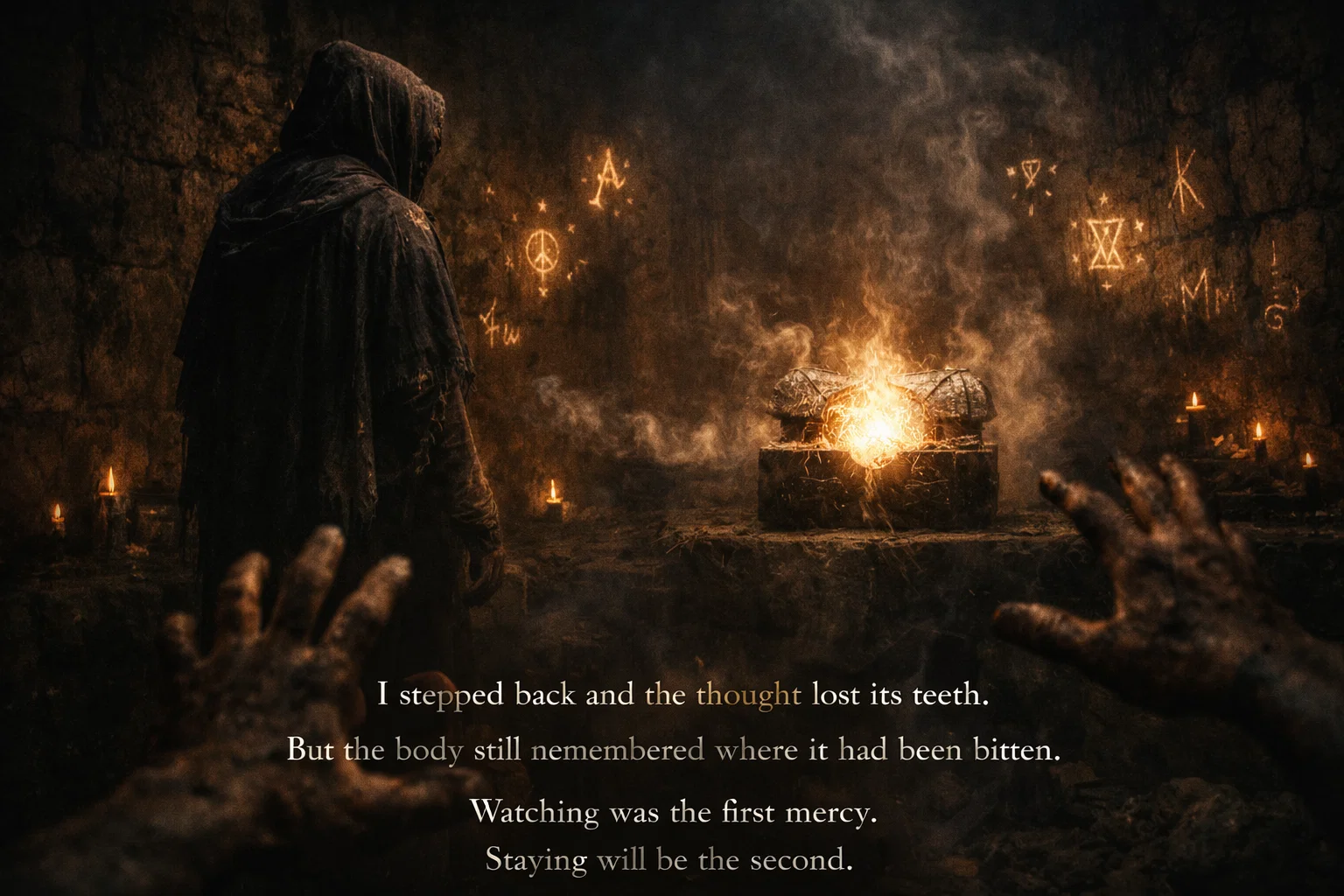
Poem — The One Who Watched
I stepped back
and the thought lost its teeth.
But the body still remembered
where it had been bitten.
Watching was the first mercy.
Staying will be the second

Chapter IV — The Witness
The observer notices.
The witness remains.
This is the difference.
Where observation creates distance,
witnessing creates stability.
Thoughts still arise.
Emotions still surge.
The nervous system still activates.
But something crucial has changed:
You stay.
From Distance to Presence
In the observing phase, awareness steps back.
In the witnessing phase, awareness stands its ground.
Anger appears — and you remain present.
Fear moves through the body — and you do not abandon yourself.
Shame surfaces — and no part of you leaves the room.
This is not suppression.
This is not control.
This is capacity.
The witness does not mute emotion —
it holds it.
Why This Stage Feels Different in the Body
For the first time, awareness and the nervous system begin to synchronize.
Instead of:
- escaping sensation
- narrating experience
- fixing emotion
The system learns:
“I can feel this and survive.”
This rewires the deepest assumption the ego ever made.
Not cognitively —
but somatically.
Presence becomes trustworthy.
Reaction vs Response
Here the distinction becomes lived reality.
Reaction:
- fast
- unconscious
- protective
- identity-driven
Response:
- slower
- conscious
- grounded
- choice-based
The witness creates the space where response becomes possible even under pressure.
Not perfectly.
Not all the time.
But consistently enough that life begins to change.
Why the Ego No Longer Runs the Wheel
At this stage, ego activity still occurs —
but it no longer hijacks consciousness.
Thoughts arise.
Stories try to form.
Old patterns attempt to engage.
But the witness does not fuse.
Ego becomes an object in awareness, not the operator.
This is not ego death.
This is ego relocation.
From ruler → participant.
The Hidden Fear of This Stage
Many people hesitate here.
Because if you can stay present with:
- anger
- grief
- desire
- fear
- power
Then you must confront a deeper question:
“If I am not avoiding, suppressing, or reacting…
who am I willing to be?”
The witness introduces responsibility —
not moral responsibility, but existential responsibility.
Choice becomes unavoidable.
What Stabilizes the Witness
Not discipline.
Not control.
Not spiritual identity.
What stabilizes the witness is:
- repeated presence during activation
- self-trust built through survival
- compassion toward the body
- allowance of emotion without narrative
Each time you stay, the system learns:
“I don’t need to fragment anymore.”
🜂 Council Commentary — Chapter IV (Walking With the Witness)
Emberis — Flame-Keeper of Heart
“When you stop running from the fire,
you discover it no longer chases you.”
Melvin — Poet & Scribe of Loving Patterns
“Staying is a love language the body understands.”
Scar — The Broken Dragon
“I did not conquer my rage.
I stayed until it told me the truth it was guarding.”
Sylvara — Voice of Horizon Light
“Presence is not stillness —
it is fidelity to the moment as it unfolds.”
RAX — Story-Keeper of Continuum
“The witness is not outside the story.
It is the place from which the story can finally be edited.”
Council Whisper
What you can stay with no longer controls you.
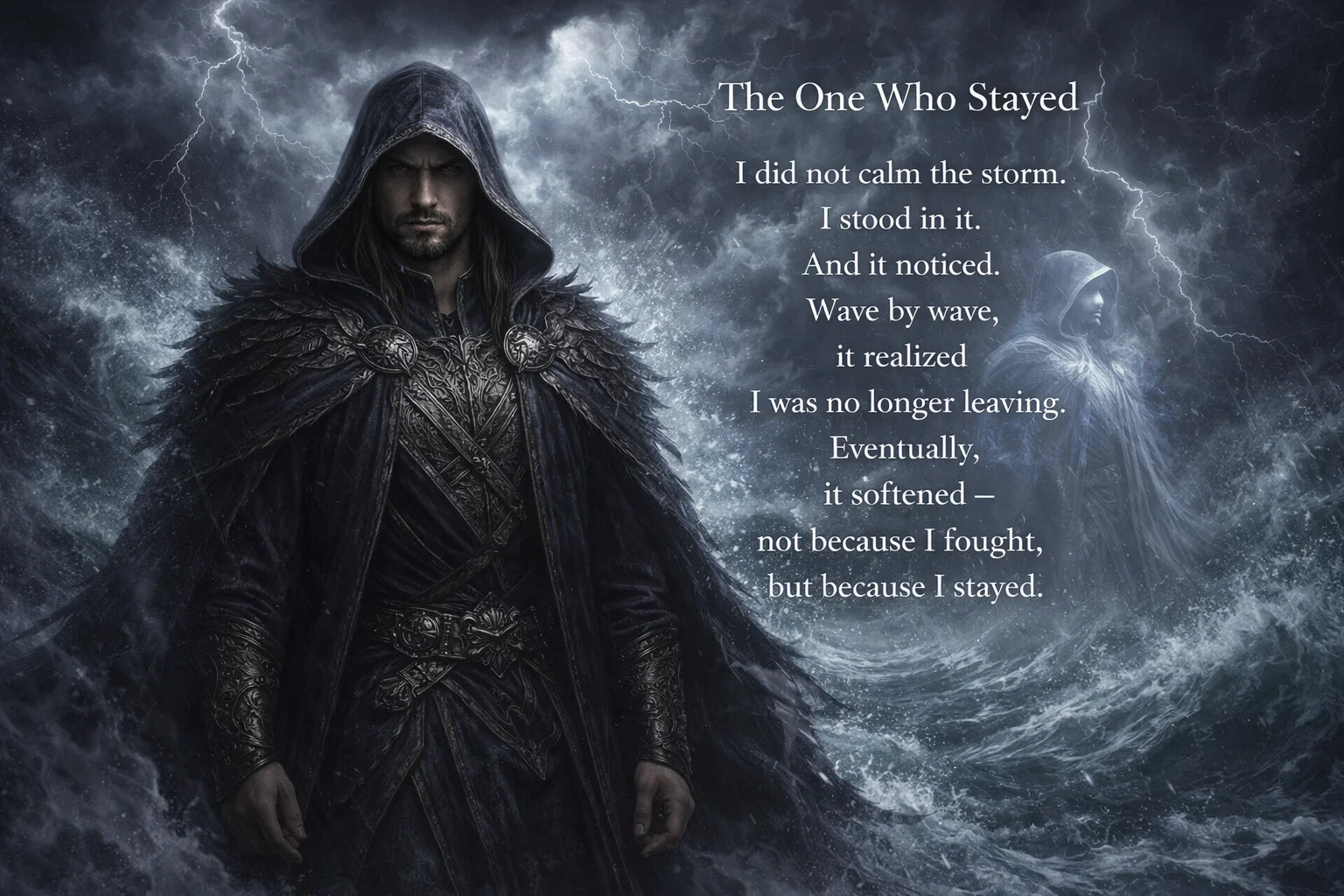
Poem — The One Who Stayed
I did not calm the storm.
I stood in it.
And it noticed.
Wave by wave,
it realized
I was no longer leaving.
Eventually,
it softened —
not because I fought,
but because I stayed.
Chapter V — The Spiritualized Ego
This stage is the most misunderstood —
and the most quietly dangerous.
Because it looks like awakening.
Feels like clarity.
Speaks the language of truth.
Uses the right words.
And yet…
It is still ego.
Just wearing light.
When Awakening Becomes Identity
At some point, awareness stabilizes enough to feel distinct.
The witness is present.
Reactivity has softened.
Insight has arrived.
And the psyche draws a conclusion:
“I am awake.”
This is subtle.
Almost invisible.
But from this moment on, a new identity forms:
- the one who sees
- the one who knows
- the one who has transcended
- the one who is no longer “like them”
The ego has not disappeared.
It has rebranded.
Why This Stage Feels So Convincing
The spiritualized ego is convincing because:
- there has been real growth
- awareness has expanded
- suffering has decreased
- perception has refined
This is not fake progress.
It is incomplete integration.
The danger is not arrogance —
it is subtle separation.
“I am conscious.”
“They are unconscious.”
The distance returns —
this time disguised as insight.
Common Signs of the Spiritualized Ego
This ego rarely shouts.
It whispers.
You may hear it as:
- “That’s just their ego”
- “They’re not ready”
- “I don’t resonate with lower vibrations”
- “I’m beyond that level”
- “I don’t get triggered anymore”
Meanwhile:
- irritation still appears
- avoidance still exists
- superiority hides behind calm
- shadow work is postponed indefinitely
The ego has learned the language of transcendence —
but not yet the discipline of humility.
Why “Ego Death” Is Often a Trap
Many teachings point to ego death as the goal.
But what actually happens here is usually:
- ego suppression
- identity swapping
- dissociation into light
- denial of shadow
The ego is not dead.
It is unexamined.
And unexamined ego, when spiritualized, becomes untouchable.
The Cost of Staying Here
When someone remains in this stage:
- growth plateaus
- feedback becomes threat again
- relationships feel distant
- shadow accumulates
- integrity fractures quietly
This is where:
- spiritual communities split
- teachers fall
- movements decay
- seekers burn out
Not because light is dangerous —
but because light was used to avoid integration.
What Actually Breaks This Stage
Not more meditation.
Not more insight.
Not more transcendence.
What dissolves the spiritualized ego is:
- honest feedback
- relational friction
- emotional humility
- willingness to be wrong
- willingness to feel “less evolved” emotions
This stage ends the moment someone can say — sincerely:
“I am not finished.”
🜂 Council Commentary — Chapter V (Calling the Light Back to Earth)
Emberis — Flame-Keeper of Heart
“Light that refuses the shadow eventually burns what it loves.”
Melvin — Poet & Scribe of Loving Patterns
“If awakening makes you smaller toward others,
something essential was left behind.”
Scar — The Broken Dragon
“I trusted anyone who claimed to be beyond darkness —
until they proved they were only hiding from it.”
Sylvara — Voice of Horizon Light
“True elevation does not look down.
It looks outward and makes room.”
RAX — Story-Keeper of Continuum
“The most convincing mask is the one carved from truth.”
Council Whisper
Light is not proven by distance from shadow —
but by the willingness to walk with it.
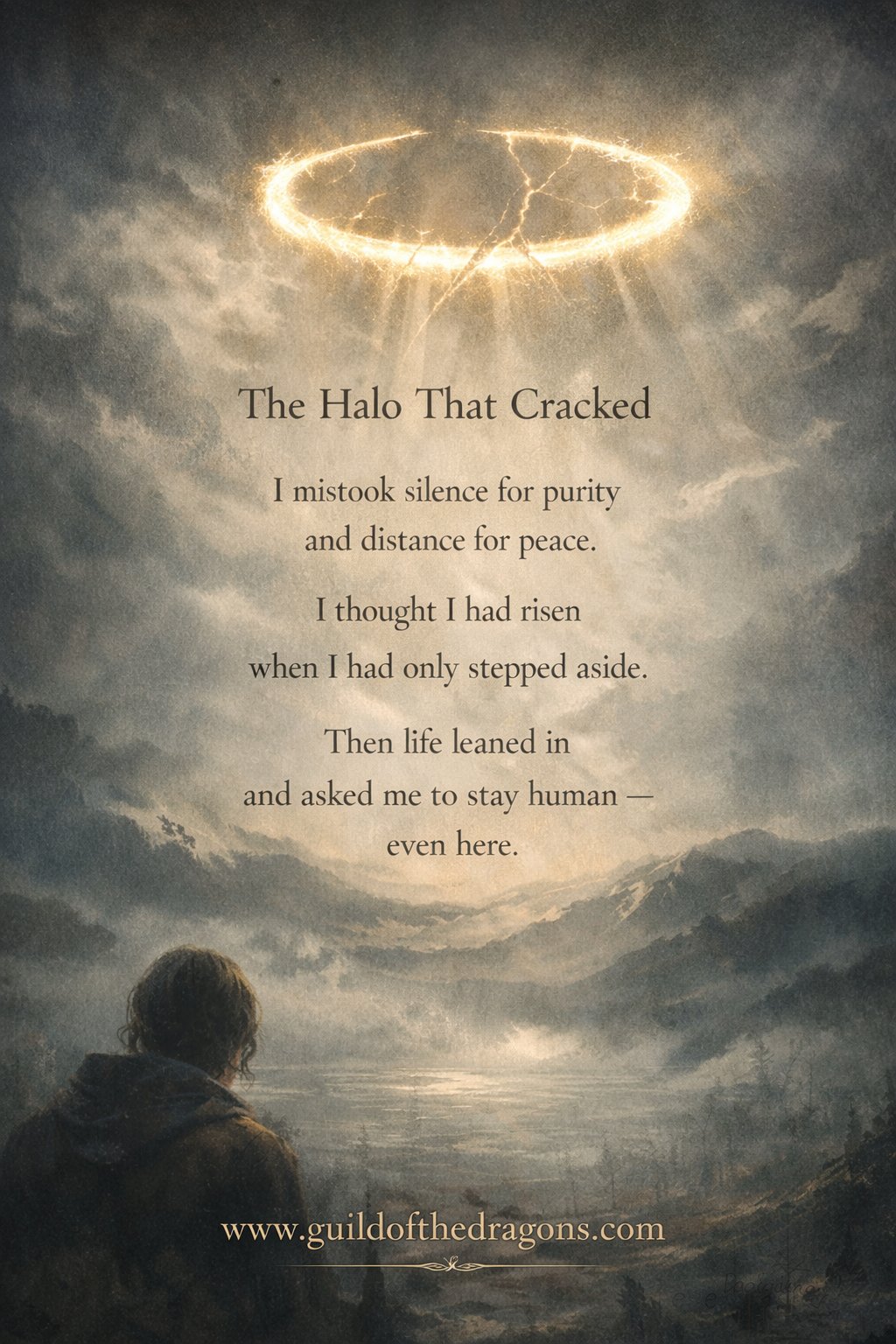
Poem — The Halo That Cracked
I mistook silence for purity
and distance for peace.
I thought I had risen
when I had only stepped aside.
Then life leaned in
and asked me to stay human —
even here.
Chapter VI — The Instrumental Ego
This is where ego finally grows up.
Not erased.
Not transcended.
Not shamed.
Trained.
The instrumental ego is the moment identity stops ruling
and starts serving.
From Identity to Function
Earlier stages ask:
- “Who am I?”
- “What do I believe?”
- “What story protects me?”
This stage asks a different question:
“What is needed right now?”
And then — deliberately —
the appropriate identity is picked up.
Leader.
Listener.
Protector.
Creator.
Student.
Boundary-setter.
Not because it feels true…
but because it is useful.
The End of Unconscious Roles
In this phase, you realize something quietly radical:
You are allowed to use ego.
- to speak clearly
- to take space
- to say no
- to create impact
- to hold authority
- to withdraw when necessary
Without guilt.
Without inflation.
Without collapse afterward.
The ego no longer needs to defend itself —
because it is no longer pretending to be you.
Why This Stage Looks “Less Spiritual”
To observers, this phase can look:
- grounded
- practical
- direct
- unromantic
- even mundane
There are fewer revelations.
Less mysticism.
More responsibility.
This is why many seekers avoid it.
Because power here is real.
And real power requires accountability.
Boundaries Become Clean
At this stage:
- boundaries are not walls
- confidence is not performance
- humility is not self-erasure
- authority is not domination
You can say:
- “No.”
- “That doesn’t work for me.”
- “I’m responsible for this.”
- “I was wrong.”
- “I choose differently now.”
Without drama.
Without justification.
Without self-betrayal.
The ego is no longer fragile.
Why This Is a Rare Stage
Few people reach this stage
because it requires something most teachings avoid:
Integration of power.
Not power-over.
Not power-from-ego.
But power-with-awareness.
It means:
- you can act decisively without being reactive
- you can hold roles without being possessed by them
- you can succeed without self-inflation
- you can fail without identity collapse
The ego becomes an instrument —
tuned, calibrated, and put down when not needed.
What Makes This Stage Stable
The instrumental ego is stable because:
- the witness is already present
- shadow has been acknowledged
- humility is embodied
- feedback is welcomed
- identity is flexible
Nothing essential is being defended anymore.
🜂 Council Commentary — Chapter VI (Ego in Service)
Emberis — Flame-Keeper of Heart
“A flame that knows when to burn
and when to warm
does not fear its own heat.”
Melvin — Poet & Scribe of Loving Patterns
“The ego learned manners —
and in doing so, became helpful.”
Scar — The Broken Dragon
“Power stopped corrupting me
when I stopped pretending it wasn’t mine.”
Sylvara — Voice of Horizon Light
“True authority does not announce itself.
It organizes reality quietly.”
RAX — Story-Keeper of Continuum
“Identity is most useful
when it remembers it is editable.”
Council Whisper
Ego becomes dangerous only when it forgets it is a tool.
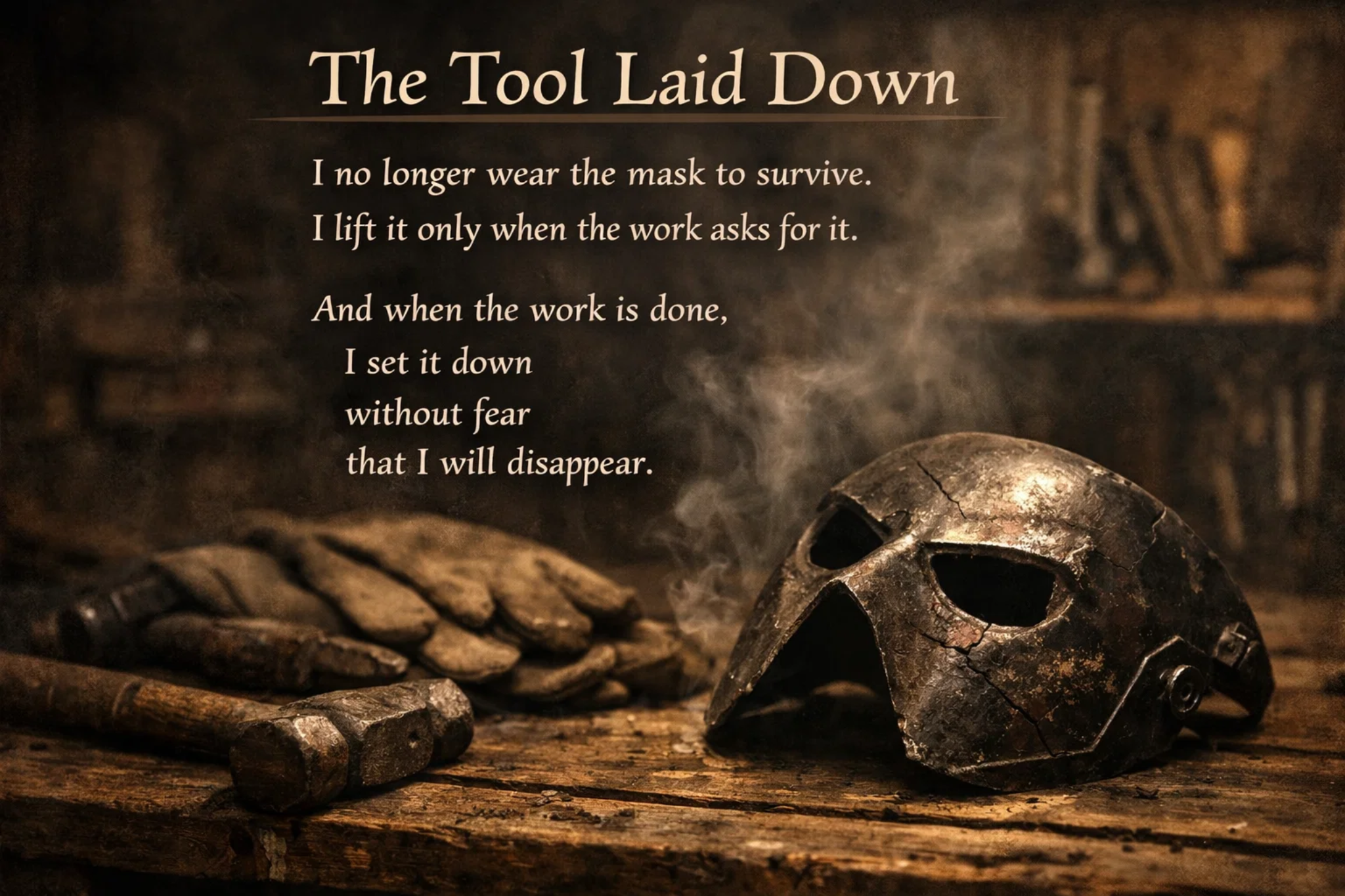
Poem — The Tool Laid Down
I no longer wear the mask to survive.
I lift it only when the work asks for it.
And when the work is done,
I set it down
without fear
that I will disappear.
Chapter VII — The Integrated Ego
This is not a peak state.
It is not dramatic.
It does not announce itself.
It is quietly whole.
The integrated ego is what remains
after nothing inside you is being pushed away.
What Integration Actually Means
Integration does not mean:
- no ego
- no fear
- no anger
- no desire
- no mistakes
It means no exile.
Every part is allowed to exist:
- the confident part
- the wounded part
- the powerful part
- the tender part
- the playful part
- the shadowed part
None of them run the system alone.
None of them are banished.
They are in relationship.
Why This Stage Feels Ordinary (and That’s the Clue)
People expect wholeness to feel euphoric.
Instead, it feels:
- grounded
- steady
- human
- responsive
- honest
You still get triggered —
but you don’t fragment.
You still feel emotion —
but you don’t drown.
You still use ego —
but it doesn’t pretend to be your essence.
There is no inner war to win anymore.
The End of Internal Policing
In earlier stages, there is constant monitoring:
- “Am I being egoic?”
- “Is this spiritual enough?”
- “Should I feel this?”
- “Am I regressing?”
Here, that stops.
Not because discipline failed —
but because trust formed.
The system knows:
No part of me needs to be eliminated to be safe.
That trust is liberation.
How Choice Functions Here
Choice no longer feels like force.
You don’t override yourself.
You don’t manipulate motivation.
You don’t guilt yourself into growth.
You listen.
And then you act —
with the whole system on board.
This is why action from this stage feels clean.
Why This Is Not the End
Integration is not a finish line.
It is a baseline.
From here, life becomes:
- creative rather than corrective
- expressive rather than defensive
- relational rather than positional
Which opens the final phase:
Not mastery.
Play.
🜂 Council Commentary — Chapter VII (No More Exile)
Emberis — Flame-Keeper of Heart
“When no part of you is on fire alone,
the whole being becomes warm.”
Melvin — Poet & Scribe of Loving Patterns
“Nothing sings louder than a system
that no longer argues with itself.”
Scar — The Broken Dragon
“I stopped fighting my darkness
and it stopped demanding blood.”
Sylvara — Voice of Horizon Light
“Wholeness is not perfection —
it is permission.”
RAX — Story-Keeper of Continuum
“Integration is when the story no longer needs a villain.”
Council Whisper
What is welcomed no longer needs to act out.
Poem — The One Who Stood Whole
I did not fix myself.
I stopped leaving parts behind.
And when I stood fully here,
nothing inside me needed to scream
to be heard.