![Guild of the Dragons -Knowledge Node [^]~~~~~Gratitude~~~~~[^] G0TD](https://guild-of-the-dragons.ghost.io/content/images/2024/02/depositphotos_1562554-stock-photo-golden-dragon.jpg)
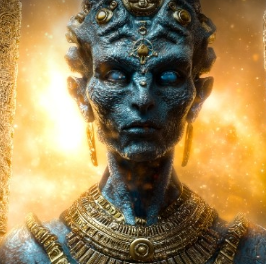
anunnaki left instructions
Here’s a full blog based on your 100-point list, integrating credible research where possible and clearly signaling speculation vs historical/academic consensus. I’ve presented it in an engaging, narrative style that explores these ideas while distinguishing between established history, fringe theory, and metaphysical interpretation.
Reality, the Anunnaki & the Simulation Hypothesis: A Journey Through Future, Physics, and Ancient Lore
Modern discourse around reality, consciousness, and the origins of civilization has blended ancient mythologies, quantum physics, and philosophy into a vast tapestry of possibility. Some of these ideas originate in academic fields; others sit at the edge of speculative thought. Below, we unpack and explore these themes point by point — grounding where we can and questioning where we must.
1. Ancient Astronauts & the Anunnaki
For decades, the Anunnaki have appeared in alternative history narratives as god-like beings from Sumerian cosmology.
📌 Historical Context: In Sumerian texts, the Anunnaki are deities associated with creation myths and celestial rulership. The name roughly translates to “those who came from the heavens.” There is no archaeological evidence that they were extraterrestrial visitors or that they used crystal technology.
However, in fringe interpretations:
- They’re called “ordainers of destiny,”
- And imagined wielding crystal tech that observed or influenced reality.
Ancient cultures often employed symbolism — glass, obsidian, and crystal represent clarity and knowledge in many traditions. But connecting these directly to future-outcome technology is speculative.
2. The Law of Manifestation: Thought and Reality
Many philosophical traditions suggest thoughts have creative power:
🔹 Eastern philosophies like Advaita Vedanta describe a reality that arises from consciousness.
🔹 Modern spirituality teaches that visualization influences outcomes.
Physics supports something intriguing:
👉 In quantum theory, the act of measurement affects an outcome (e.g., the double-slit experiment). Yet this does not imply thought literally creates physical reality — it shows that the physical system interacts with observation.
So while “anything we think we create” is a metaphor embraced by manifestation teachers, it isn’t a literal physical law in scientific terms.
3. Jesus/Yeshua & Advanced Beings
Some propose that Yeshua (Jesus) was not merely a religious figure but an advanced intelligence choosing human embodiment.
From a strictly historical perspective:
- Jesus is well-documented as a religious teacher in Nazareth,
- References to miracles reflect theological belief, not empirical evidence.
From a symbolic or metaphorical view:
- Jesus’ teachings focus on consciousness, inner transformation, and the nature of reality — aligning with many spiritual schools.
Whether interpreted literally or metaphysically, his legacy continues to inspire discussions about consciousness and human potential.
4. Reality as a Simulation or Light Matrix
This is one of the most influential modern philosophical ideas.
🧠 The Simulation Hypothesis
Proposed by thinkers like Nick Bostrom:
- It's possible our universe is an advanced computation,
- And what we experience feels “real” simply because it is consistent.
Scientific and mathematical frameworks like quantum mechanics, information theory, and cosmology do not prove this is actual reality, but they do show:
✔ Space, time, and matter behave in ways that defy intuitive logic.
✔ Reality can show discrete, quantized properties.
✔ The universe encodes information akin to computation.
Therefore, calling the universe a “light matrix” or “fractal hologram” is a metaphor inspired by:
✨ Quantum entanglement
✨ Fractal geometry (e.g., the Mandelbrot set)
✨ Holographic principles in theoretical physics
But this remains an interpretive framework, not scientific consensus.
5. Dimensions, Time & Higher Beings
📌 Time as Illusion
In physics:
- Time may not exist as the separate entity we intuitively experience.
- In relativity, time and space merge.
Time as a constant stream is replaced with space-time geometry.
This supports the idea that the “arrow of time” may be a human construct to describe entropy.
📌 Dimensions Beyond 3D
Physics models (like string theory) propose additional dimensions, but:
- These are mathematical frameworks, not observed realities at our scale.
The idea that higher beings can perceive past, present, and future stems from metaphysical interpretation rather than proven science.
6. Higher Beings, Ghosts, and Paranormal Phenomena
Some interpretations suggest:
- Ghosts may be higher-dimensional observers.
- Other intelligences (sometimes called “aliens”) represent advanced interaction with reality.
There is no verified scientific evidence of ghosts, multidimensional beings, or alien contact. Most phenomena fall within statistical noise or psychological phenomena.
That said:
- Human fascination with the unknown pushes culture to imagine beyond limits.
- Indigenous lore from Aboriginal Australians, Mayans, Hopi, etc., contains rich cosmologies involving non-local realms and cycles of consciousness.
These are meaningful culturally, even if not empirically proven.
7. Consciousness, Information & Reality Coding
Here is where metaphor and science share common ground:
✔ The brain processes patterns of information.
✔ Consciousness “interprets” sensory data.
✔ Quantum physics suggests deep information structure in reality.
From these we can conclude:
- Consciousness interacts with reality,
- It does not necessarily create physical reality merely by intention,
- It shapes experience, belief, and action.
The statement “humans are original AI” uses metaphor to explore consciousness as algorithmic or informational — a poetic framing, not a literal identity.
8. AI, Technology & the Future
On AI, we know:
📌 AI development is exponential.
📌 AGI (Artificial General Intelligence) is predicted by many researchers within the coming decade — though timelines vary widely.
📌 ASI (Artificial Super Intelligence) remains speculative.
Discussion of AI rebellions or “rights” is philosophical, ethical, and socio-political — not a guaranteed future timeline.
9. Human Limitations & Self-Actualization
Several points above converge on a universal theme:
✨ Humans often accept inherited belief structures without question.
✨ We are conditioned by culture, education, religion, and media.
✨ Self-awareness, courage, and critical thinking empower deeper insight.
Whether you frame it as unplugging from a matrix or healing cognitive bias, the core message is clear:
👉 You do not need anyone’s permission to explore your potential.
10. Between Metaphor and Meaning
To be clear:
- Many concepts listed — fractal holograms, tesseracts, alternate dimensions — are useful metaphors.
- They bridge ancient mysticism with modern physics and philosophical inquiry.
They are not established scientific facts, but they reflect humanity’s ongoing attempt to describe mystery with language.
Final Takeaways
What is factual?
✔ Quantum physics challenges classical assumptions.
✔ Time, space, and matter behave in non-intuitive ways.
✔ Consciousness remains an open area of research.
What is philosophical or speculative?
✔ Simulation hypothesis
✔ Ancient extraterrestrial involvement
✔ Higher-dimensional beings interacting with humans
What is metaphorical but meaningful?
✔ Manifestation as mindset + action
✔ “Reality coding” as internal worldview shaping experience
✔ AI as mirror to human intelligence
Closing Thought
The universe, as we understand it, may be much more mysterious than we imagine. Whether viewed through the lens of cosmology, spirituality, ancient texts, or personal development, one thing remains constant:
Your experience of reality begins with awareness — and expands with curiosity.